
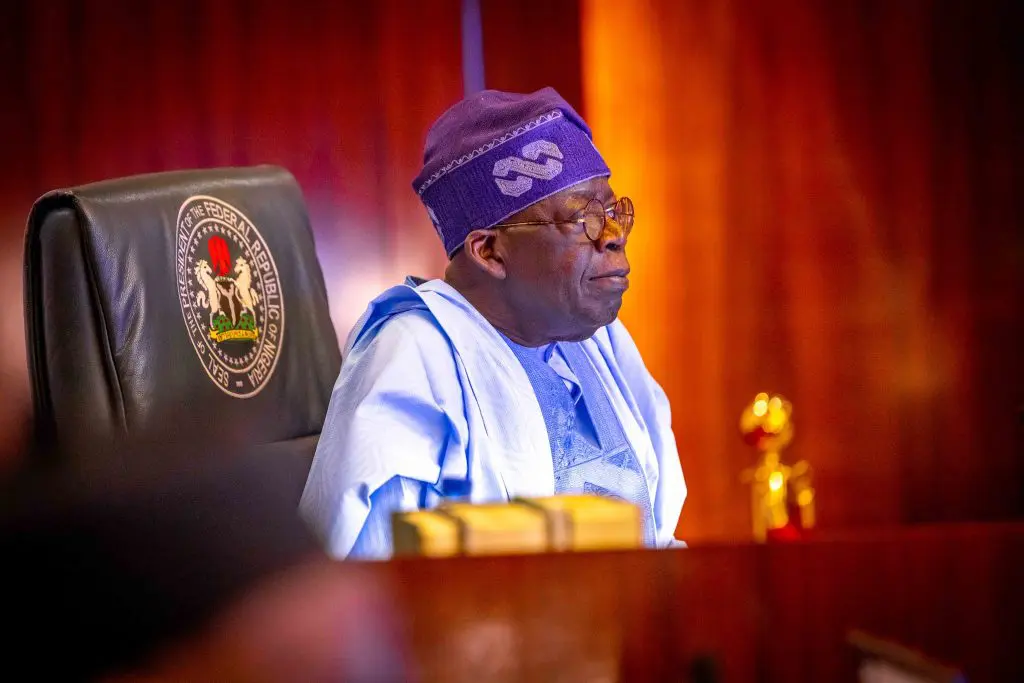
The Northern Elders Forum (NEF) has accused President Bola Tinubu’s administration of systematically marginalizing Northern Nigeria in the allocation of funds for critical infrastructure projects, raising concerns that the perceived neglect could threaten national unity.
In a strongly worded statement, the NEF described the distribution of infrastructure funding as “lopsided,” pointing to significant disparities in federal investments between the northern and southern regions.
The Forum, through its spokesperson Professor Abubakar Jika Jiddere, highlighted what it called “tokenistic” allocations to northern infrastructure projects compared to substantial investments in the south.
Specifically, the NEF cited the Lagos–Calabar Coastal Highway, which received N1.34 trillion, and the Second Niger Bridge, allocated N148 billion, as examples of massive southern projects.
In contrast, northern projects such as the Abuja–Kano Expressway (N252 billion) and the Wusasa–Jos Road (N18 billion) were described as receiving inadequate funding.
The NEF also pointed to the neglect of key roads in the North East, including the Jalingo–Numan–Yola–Bama and Bauchi–Gombe highways, which have seen little to no federal attention.
The NEF further criticized the state of rail infrastructure in the North, particularly the dormant Port Harcourt–Maiduguri Eastern Rail Line, which has been inactive for over a decade.
Jiddere questioned why the Nigerian Railway Corporation has prioritized modern rail initiatives in the south while northern rail networks continue to deteriorate.
“The disparity is not just glaring, it is dangerous,” Jiddere stated, warning that the “systematic exclusion” of the North from major infrastructure investments risks deepening inequality, fueling regional resentment, and undermining Nigeria’s unity.
The Forum’s accusations come amid broader concerns about perceived regional imbalances in Tinubu’s administration.
Earlier this year, the NEF criticized the government for allegedly favoring the Southwest in federal appointments and for policies that they claim exacerbate economic hardship in the North, such as the relocation of key departments of the Central Bank of Nigeria and the Federal Airports Authority of Nigeria from Abuja to Lagos.
The NEF called for immediate action to address these disparities, urging northern lawmakers, governors, and federal appointees to reject any future budgets that do not equitably distribute infrastructure funds.
The Forum also demanded a public explanation from the Federal Ministry of Works and the Nigerian Railway Corporation regarding the allocation imbalances and a clear roadmap for rehabilitating northern roads and railways.
However, the Tinubu administration has defended its infrastructure investments, emphasizing efforts to address national development holistically. On June 10, 2025, President Tinubu flagged off several projects, including sections of the Sokoto–Badagry Superhighway and the rehabilitation of roads in northern states like Kaduna, Kano, and Borno.
Speaking at the commissioning of the Lekki Deep Sea Port Access Road in Lagos, Tinubu urged state governors to collaborate with the federal government to streamline approvals for major infrastructure projects, emphasizing that such cooperation would benefit all regions.
The Northern States Governors Forum has also expressed support for Tinubu’s efforts, commending his commitment to tackling security and infrastructure deficits in the North.
In a recent communique, the Forum highlighted plans to enhance inter-state collaboration on security and infrastructure, signaling a willingness to work with the federal government.
Critics of the NEF’s stance, including the Coalition of Northern Political Groups (CNPG) and the North Eastern Youths Advocacy for Peace and Development, have accused the Forum of engaging in politically motivated rhetoric.
The CNPG described the NEF’s claims as “baseless” and argued that Tinubu’s administration has made deliberate efforts to place northerners in strategic positions to address regional challenges. They pointed to appointments like that of National Security Adviser Nuhu Ribadu as evidence of Tinubu’s commitment to the North.
The controversy underscores Nigeria’s delicate regional dynamics, where perceptions of marginalization can inflame tensions.
The NEF’s accusations have sparked debates on social media platforms like X, with some users arguing that the North has been historically favored in political power and should not complain about infrastructure disparities, while others support the NEF’s call for equitable development.
The issue is likely to remain a focal point as Nigeria approaches the 2027 elections, with the NEF hinting that continued marginalization could influence the region’s voting decisions.
President Tinubu, speaking at a recent event, acknowledged ongoing economic challenges but urged Nigerians to remain patient, promising that his administration’s reforms would yield long-term benefits.
“There is light at the end of the tunnel,” he said, emphasizing that his government is working to stabilize the economy and improve living standards across the country.
As the debate over infrastructure allocation continues, the NEF’s accusations highlight the need for transparent and inclusive policymaking to maintain Nigeria’s fragile unity.
The Forum has called for a national dialogue to address regional grievances, warning that failure to act could have far-reaching consequences for the country’s stability.
Source: Daily Post
