
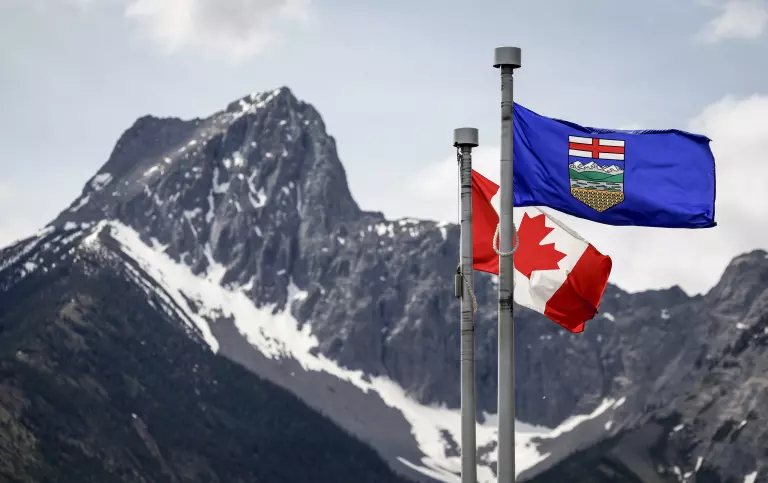
President Donald Trump’s arrival at the 51st G7 summit in Kananaskis, Canada, on June 15 marks a high-stakes moment for global diplomacy, as world leaders prepare to confront his aggressive trade policies and provocative rhetoric head-on.
With tensions simmering over Trump’s recent tariffs, threats to annex Canada, and skepticism toward multilateral alliances like NATO, G7 leaders are signaling they’re ready to stand firm, aiming to prove they’re not cowed by the U.S. president’s tactics.
The summit, hosted by Canadian Prime Minister Mark Carney, comes at a time of strained relations with the United States.
Trump’s imposition of tariffs on G7 partners—targeting steel, aluminum, and auto parts from Canada, Japan, and European nations—has sparked outrage and vows of retaliation.
His offhand remarks about absorbing Canada as the “51st state” have further inflamed tensions, with Carney asserting that Washington no longer holds a predominant role on the global stage.
In response, leaders like French President Emmanuel Macron, German Chancellor Friedrich Merz, and British Prime Minister Keir Starmer are expected to project unity and resilience, focusing on collective priorities like supporting Ukraine, addressing climate change, and managing global economic stability.
The memory of Trump’s first-term G7 appearances looms large. In 2018, at the Charlevoix summit in Quebec, he withdrew support for the joint communiqué, called then-Prime Minister Justin Trudeau “dishonest and weak,” and left early, leaving allies reeling.
A viral photo of German Chancellor Angela Merkel staring down a defiant Trump captured the tension.
This year, European leaders are hoping to avoid a repeat of such chaos, with Carney opting to forgo the traditional comprehensive communiqué in favor of standalone joint statements on key issues like trade, AI, and international security.
“Trump’s approach thrives on disruption, but we’re prepared to focus on substance,” a senior Canadian official said, speaking on condition of anonymity.
“The G7 remains a critical platform for democratic cooperation, and we won’t let it be derailed.” Leaders are also navigating the fallout from Israel’s recent attacks on Iran’s nuclear facilities, which threaten to dominate discussions as oil prices surge and fears of retaliatory terror attacks grow.
Ukrainian President Volodymyr Zelensky, invited as a guest, will likely press for continued G7 support against Russia, though Trump’s push for a quick resolution to the Ukraine conflict and his warmer stance toward Moscow could complicate talks.
Other invited leaders, including Indian Prime Minister Narendra Modi, Mexican President Claudia Sheinbaum, and Australian Prime Minister Anthony Albanese, signal Canada’s effort to broaden the summit’s perspective.
However, Trump’s presence—and his history of upending multilateral gatherings—has leaders bracing for unpredictability.
“This isn’t about intimidation; it’s about holding the line on our values and interests,” said a European diplomat.
Security in Kananaskis is tight, with the RCMP, Calgary police, and Canadian Armed Forces coordinating a massive operation.
Protest zones have been designated in Calgary, with livestreams planned to relay demonstrators’ messages to the restricted summit site, a nod to balancing free expression with security.
As the summit unfolds from June 15 to 17, the world will watch whether G7 leaders can maintain a united front or if Trump’s confrontational style will once again fracture the group.
Sources: The New York Times
