
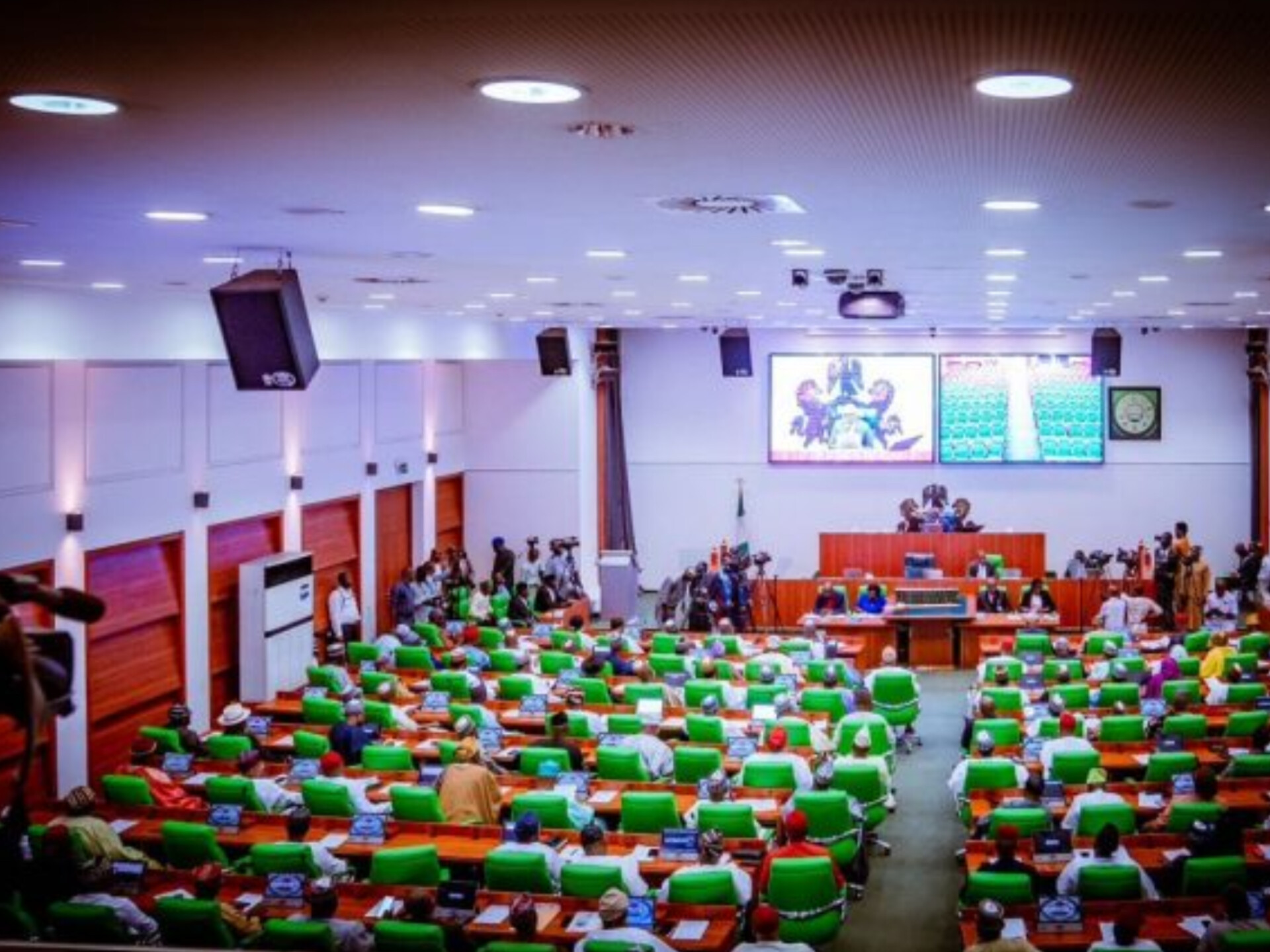
The House of Representatives Committee on Public Accounts on Monday continued its investigative hearing into the alleged diversion of N500 million public funds involving the Federal Ministry of Transportation and the Nigerian Export-Import (NEXIM) Bank.
The allegation stems from an audit query issued by the Office of the Auditor General of the Federation (oAuGF), which raised concerns over the management and utilization of the Interstate Road Transit (ISRT) scheme funds—an ECOWAS-backed regional trade facilitation initiative.
Presiding over the session, Committee Chairman Bamidele Salam directed the Federal Ministry of Transportation and NEXIM Bank to submit all relevant financial and operational documents related to the ISRT facility within two weeks.
In his testimony, NEXIM Managing Director, Abba Bello, explained that the bank was designated in April 1998 by the Federal Government as the national guarantor of the ECOWAS ISRT scheme.
Under the agreement, NEXIM issues customs bonds to support the seamless movement of goods across ECOWAS member states, thereby reducing transit delays and border inefficiencies.
“The role of NEXIM is to ensure that goods transported across ECOWAS borders do not get offloaded in transit countries, in line with the ECOWAS Inter-State Road Transit Convention,” Bello said. He added that the scheme aims to boost regional trade and reduce logistics challenges for Nigerian businesses.
According to Bello, NEXIM Bank currently holds N507 million in the ISRT account, largely accrued from investments in Treasury Bills. Of that amount, N170 million has been spent on stakeholder engagements and travel expenses.
He further revealed that the ISRT scheme was officially launched in August 2000 at the Seme border in Lagos State, but actual funding from the Ministry of Transportation only began in 2016. Since then, the Ministry has disbursed N500 million to NEXIM in five installments between 2016 and 2024.
A document presented to the committee disclosed that NEXIM had earned over N161 million in investment income from the fund, while spending N121.9 million on scheme-related activities. As of April 30, 2025, the seed fund’s balance stood at N539.5 million.
Despite these disclosures, the oAuGF expressed dissatisfaction with the evidence presented. The audit report raised red flags over the absence of tangible proof that the ISRT scheme is active or that funds have been effectively utilized.
The report warned of potential loss and diversion of public funds, stating that: “There is no evidence that the money contributed is presently being put to use; that the ECOWAS/ISRT scheme is actually in operation; or that it has been functional from 2015 to date.”
In response, the oAuGF directed the Permanent Secretary of the Ministry of Transportation to furnish the National Assembly’s Public Accounts Committees with credible documentation proving the existence and operations of the scheme.
The Auditor General’s Office also mandated the Ministry to recover and remit N400 million to the Treasury, and submit evidence of the remittance to the committee.
Chairman Salam emphasized that accountability was paramount and issued a two-week ultimatum to both NEXIM and the Ministry of Transportation to produce all requested documentation. He stated, “This is a serious matter involving public funds. The House expects full cooperation from all parties involved.”
As the probe deepens, lawmakers are poised to determine whether the ISRT scheme has indeed delivered on its promise of fostering regional trade or has merely be
come a conduit for fund mismanagement.
