
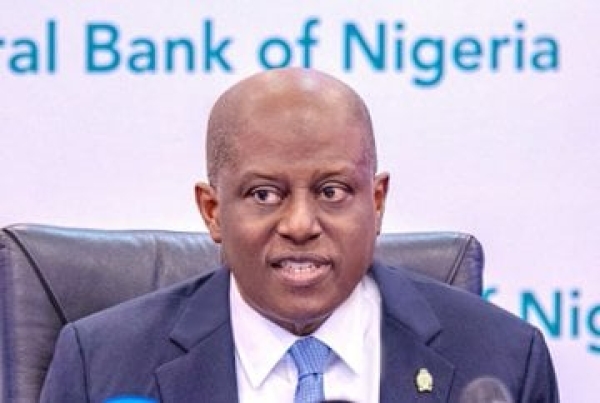
The Central Bank of Nigeria (CBN) has lowered the Monetary Policy Rate (MPR) by 50 basis points to 27 percent, the first reduction in two years, signaling a cautious step toward supporting growth while maintaining economic stability.
The move, announced by CBN Governor Olayemi Cardoso after the September 2025 Monetary Policy Committee (MPC) meeting in Abuja, follows five straight months of easing inflation and improved economic outlook.
“The decision reflects confidence in the disinflationary trend and the need to balance recovery with price stability,” Cardoso told reporters.
Alongside the rate cut, the MPC introduced a major tightening measure — a 75 percent Cash Reserve Ratio (CRR) on non-TSA public sector deposits. This means commercial banks must keep three-quarters of government deposits not lodged in the Treasury Single Account (TSA) with the CBN. The governor said the policy would strengthen monetary control, enforce fiscal discipline, and reduce excess liquidity in the banking system.
Other adjustments include cutting the CRR for commercial banks from 50 to 45 percent while keeping merchant banks’ CRR at 16 percent and the liquidity ratio steady at 30 percent. The standing lending corridor around the MPR was also narrowed to +250/-250 basis points.
On external reserves, Cardoso revealed that Nigeria’s gross reserves have risen to $43.05 billion as of September 11, 2025, providing an import cover of more than eight months — the highest level since 2019. He credited the gains to improved investor confidence and initiatives such as the Non-Resident BVN scheme, which has significantly boosted foreign inflows.
“Our foreign reserves have been on an upward trajectory, and we’re confident of sustaining this growth, targeting $1 billion monthly inflows by next year,” he said.
Despite concerns over pre-election spending pressures ahead of 2026, Cardoso reiterated the CBN’s determination to push inflation to single digits. “That is our goal, and we remain resolute,” he affirmed, noting that close collaboration with the Ministry of Finance has been central to recent successes.
The CBN expects harvest-season food supplies, exchange rate stability, and earlier policy tightening to further moderate inflation in the months ahead.
With this latest decision, the apex bank signals a delicate balance — easing borrowing costs while tightening control over government funds — as it works to anchor confidence, strengthen reserves, and curb inflation.
