
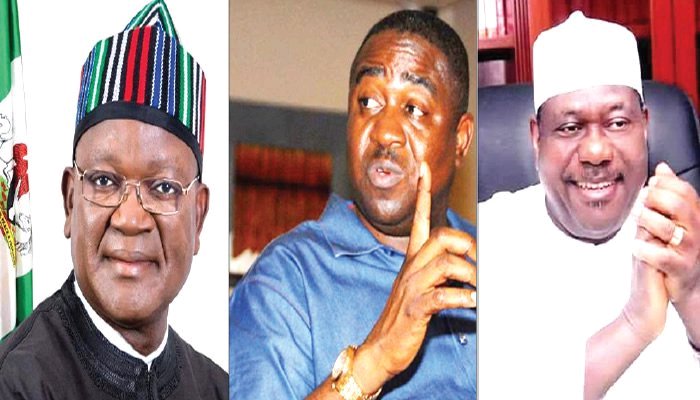
The politics of second-term governorship in Benue State has, since Nigeria’s return to democratic rule in 1999, followed a consistent and troubling pattern marked by elite resistance, strategic alliances, and heightened political tension.
From 2003 onward, administrations under George Akume, Gabriel Suswam, and Samuel Ortom all experienced similar dynamics as they approached second-term bids. Political actors, often former rivals, formed unlikely alliances driven less by ideology and more by concerns over power, influence, and political survival.
In several cases, these rivalries extended beyond rhetoric, with reports of intimidation and violence shaping the political landscape. Despite these challenges, incumbents who maintained public support and strong federal ties ultimately secured reelection.
Observers say the current administration of Hyacinth Alia is witnessing a comparable trend. Emerging political coalitions are once again accused of deploying familiar tactics, including amplifying insecurity concerns, spreading unverified claims, and shaping narratives aimed at undermining the government.
Security remains a pressing issue in Benue, reflecting a broader national challenge. Analysts note that while insecurity is real, it is not unique to the state, and addressing it requires structural reforms, particularly in policing. Governor Alia has publicly supported the creation of state police, a position that aligns with views expressed by President Bola Ahmed Tinubu on security reforms.
However, concerns have been raised over what some describe as the politicization of insecurity, with critics accused of leveraging the situation for political advantage without presenting clear or workable alternatives.
Adding to the tension are recurring but unclear allegations that Governor Alia has fallen out of favor with key federal figures, including Secretary to the Government of the Federation, George Akume, and President Tinubu. These claims, largely based on insinuation, have yet to be substantiated, leaving questions about their validity and intent.
Political analysts argue that without concrete evidence, such allegations risk further muddying public discourse, raising critical questions about accountability and the motivations behind the narratives shaping Benue’s evolving political scene.
