
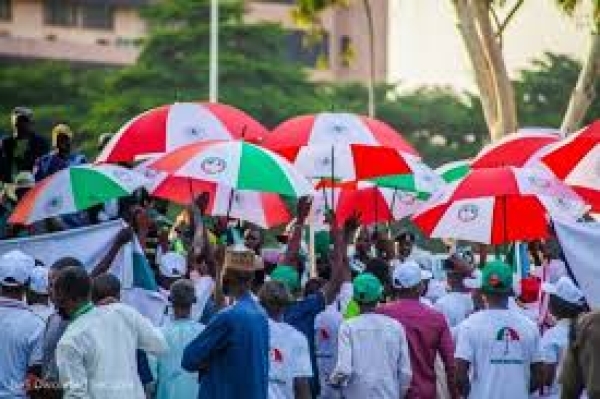
When the Peoples Democratic Party (PDP) convened its long-awaited 102nd National Executive Committee (NEC) meeting in Abuja a few weeks ago, many casual observers saw it as just another political gathering. But for those familiar with Nigeria’s turbulent political landscape, the event was far from ordinary. It was a fragile rebirth for a party once written off as politically extinct.
Unlike previous NEC sessions, often marred by rancour, chaos and dramatic walkouts, this meeting held firm. For a party battered by post-2023 electoral setbacks, bitter internal feuds and sabotage, the mere fact that the NEC convened and ended without implosion was a victory in itself.
The PDP has always lived dangerously, teetering on the thin line between collapse and resurgence. Its history is punctuated by crises that would have buried lesser parties—the 2006 “Third Term” saga, the 2014 governors’ walkout that birthed the All Progressives Congress (APC), and the debilitating leadership quarrels after the 2019 polls.
The 2023 elections brought yet another low, as the G-5 rebellion led by Nyesom Wike split the ranks and the party lost power at the federal level. Yet, the 102nd NEC defied predictions. It demonstrated the party’s remarkable survival instinct and hinted at a renewed capacity for reinvention.
At the heart of this turnaround was former Senate President Bukola Saraki, chair of the PDP Reconciliation and Strategy Committee. Tasked with steering the party through treacherous waters, Saraki’s leadership style—consultative, patient and inclusive—became a stabilising force. He mediated rather than imposed, absorbed dissent instead of crushing it, and prioritised survival over personal ambition.
This approach, now dubbed the “Saraki Doctrine,” emphasised dialogue over decrees, inclusion over exclusion and consensus over conflict. It was the glue that held the 102nd NEC together.
The meeting itself was not without danger. The question of whether to unseat National Secretary Samuel Anyanwu threatened to trigger a constitutional crisis that could have paralysed the party.
A potential showdown over the lingering influence of Nyesom Wike loomed in the background, his defiance in the 2023 election still fresh in the minds of many. Meanwhile, tensions between PDP governors and the National Working Committee (NWC) presented another flashpoint, with unity at stake.
Yet, through Saraki’s mediation, compromises were struck. Anyanwu’s mandate was revalidated, Wike’s bloc was contained without being alienated, and the governors were persuaded to align with the NWC.
By the end of the NEC, both the National Chairman and Secretary had been affirmed in office, silencing rumours of imminent removal. The party also resolved to press ahead with convention plans, signalling organisational readiness instead of paralysis. For the first time since 2023, PDP governors spoke with one voice, a unity Bauchi governor Bala Mohammed described as “a new beginning.”
For grassroots members long disillusioned by elite quarrels, the symbolism of survival mattered as much as the resolutions. The sight of PDP leaders seated together, issuing communiques without rancour and projecting order carried psychological weight.
It reminded members and the wider electorate that the PDP was not finished. National Publicity Secretary Debo Ologunagba hailed the outcome as “a demonstration of internal democracy and resilience.”
The fragile peace, however, faces a fresh test. Wike and a coalition of heavyweights including Samuel Ortom, Ayo Fayose, Okezie Ikpeazu and Ifeanyi Ugwuanyi have issued six preconditions for what they consider a “legitimate” convention.
Their demands range from fresh congresses in Ebonyi and Anambra to upholding zoning arrangements, many of them grounded in existing court judgments. While potentially divisive, these conditions also signalled something else: engagement. Wike’s bloc has not abandoned the PDP; it has simply staked terms for inclusion.
The danger is clear. Mishandling these court orders could invalidate the planned convention. But there is also opportunity. Resolving them provides a structured path to harmony. Zoning, long the adhesive that kept the PDP balanced, once again hangs in the balance. If managed wisely, it can be the bridge to unity. If bungled, it risks reopening old wounds.
The 102nd NEC may not have solved all the PDP’s problems, but it restored motion where paralysis once reigned. It shifted the party from bitterness to fragile consensus and offered a chance at rebirth. The coming convention will be the real test—whether PDP can consolidate this fragile unity or slip back into factional wars.
For now, one thing is certain: the PDP is no longer writing its obituary. With Saraki’s steady hand guiding its survival, the party has taken the first step toward renewal.
