
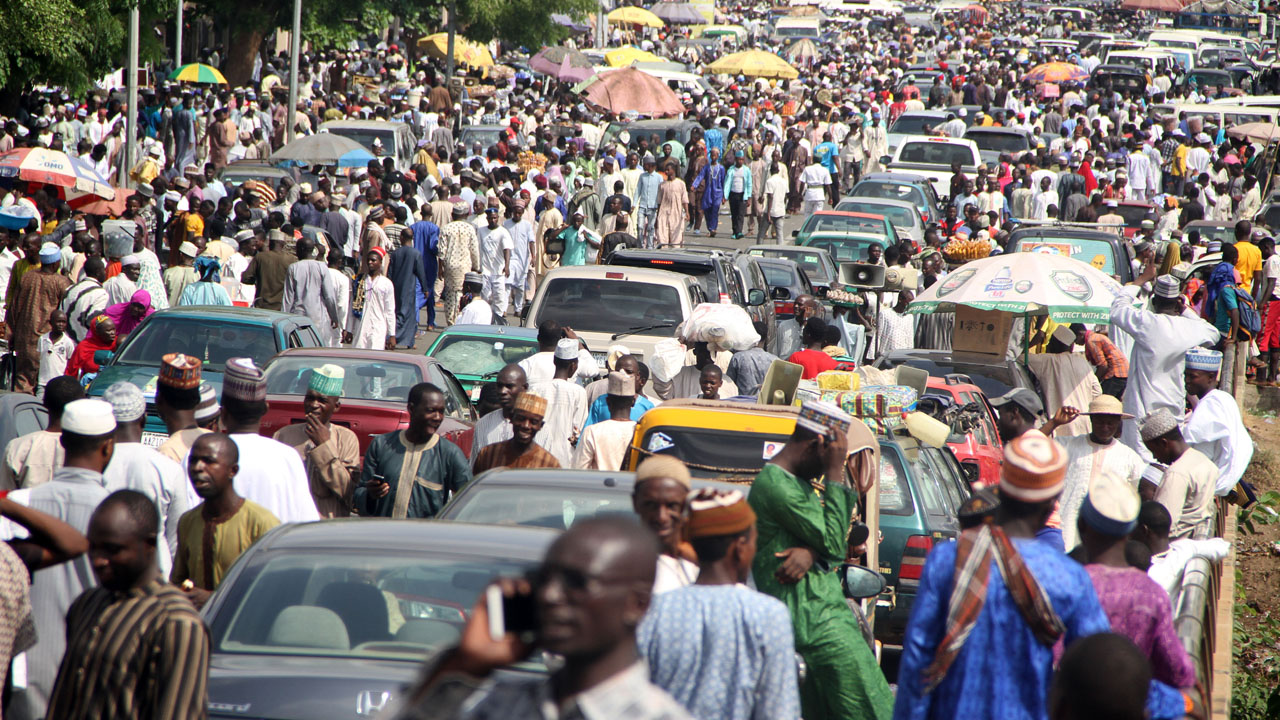
A senior lecturer at Hussaini Adamu Polytechnic, Kazaure, Dr. Tijjani Ahmad, has supported the World Bank’s recent findings that over 100 million Nigerians still live below the poverty line despite claims of economic stability.
In an interview with DAILY POST on Thursday, Dr. Ahmad explained that, based on the World Bank’s standard, anyone living on less than two dollars a day is considered poor.
“With the current exchange rate, two dollars is roughly ₦3,000 daily — about ₦90,000 per month,” he said. “But how many Nigerians earn up to ₦90,000 monthly? Even most salaried workers don’t. That means over half of the population survives below the poverty line.”
Dr. Ahmad, who is also a Research Fellow at the African Centre for Tax and Governance, noted that while macroeconomic indicators suggest progress, the reality for ordinary Nigerians remains harsh.
“Yes, the GDP is rising, inflation is easing, and the exchange rate is stabilizing, but that’s the big picture. Growth at the top takes time to trickle down to ordinary citizens,” he explained.
According to him, there’s a difference between economic growth and development.
“When we talk about growth, it’s about revenue and GDP size. But development is when that growth begins to improve people’s lives — and we’re not there yet,” he added.
Dr. Ahmad further observed that the northern part of the country remains disproportionately affected by poverty due to lower literacy levels, weak formal employment opportunities, and large family sizes.
“In many northern homes, a single breadwinner supports multiple wives and several children, sometimes over twenty, while in the South, smaller family sizes make it easier to manage,” he said.
On the impact of recent government policies, the economist pointed to the removal of fuel subsidy and the floating of the naira as key factors that deepened hardship.
“When the subsidy was removed, there should have been immediate cushioning measures. The naira’s devaluation from below ₦1,000 to over ₦1,500 also worsened living standards,” he stated.
Dr. Ahmad further blamed the previous administration’s excessive money printing and borrowing for weakening the naira and depleting foreign reserves.
Despite these challenges, he acknowledged that the current government is making efforts to restore stability, even though the return of fuel subsidy is unrealistic.
“Government is working to stabilize the situation, but the real success will be when citizens start to feel the positive impact in their daily lives,” Dr. Ahmad concluded.
