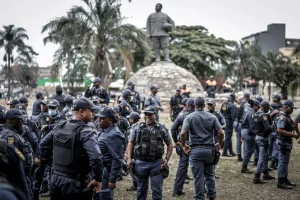
South African Police Deployed Ahead of Anti-Migrant Protest Deadline

South African authorities deployed heavy security across parts of the country on Tuesday to prevent unrest and violence following an unofficial deadline issued by anti-immigration groups demanding undocumented foreign nationals leave the country.
Police were stationed in key locations to deter looting and attacks, while thousands of migrants sought refuge or gathered at consulates and transit points in hopes of returning to their home countries.
In recent weeks, at least four foreign nationals—including two Mozambicans, one Ethiopian and one Malawian—have reportedly been killed in anti-immigrant attacks. The growing tension has prompted several African governments to organise buses and flights to evacuate their citizens from South Africa.
According to the Border Management Authority, about 25,000 people have been repatriated in recent weeks. Officials said around 15,000 Malawians had already been processed for departure, while thousands of citizens from Zimbabwe, Mozambique, Nigeria, Ghana and other African countries have also left.
Many migrants said they chose to leave out of fear for their safety. Some claimed they were dismissed from their jobs or evicted by landlords worried about possible penalties or attacks by vigilante groups.
In Johannesburg’s Soweto township, demonstrators marched while chanting slogans calling for undocumented migrants to leave. The protests were linked to the March and March movement, which had declared June 30 the start of a nationwide campaign demanding the deportation of undocumented foreigners. The group’s leader, Jacinta Ngobese-Zuma, insisted the campaign was intended to remain peaceful.
Fearing a repeat of the deadly July 2021 unrest that claimed about 350 lives, the South African government increased security nationwide. President Cyril Ramaphosa also announced stronger measures to tackle illegal immigration and appealed to traditional leaders to help calm tensions.
KwaZulu-Natal Premier Thami Ntuli warned that authorities would not allow the province to descend into violence again, regardless of concerns over undocumented migration.
South Africa continues to attract migrants from across the continent despite facing high unemployment, crime and pressure on public services. Analysts, however, argue that the country’s challenges stem more from governance failures and corruption than immigration, warning that anti-migrant sentiment has become increasingly politicised ahead of the country’s local government elections later this year.
Author

About The Author